Introduction
In a world that increasingly champions inclusivity, accessible public transportation has emerged as a crucial element for fostering equitable societies. As cities expand and populations grow, the demand for inclusive transit options has never been more pressing. The challenge is global: how do we create barrier-free public transit systems that cater to all abilities? From the bustling metros of Tokyo to the accessible buses and trains of London, the drive towards universal design in public transport is reshaping how we perceive mobility solutions for disabled travelers.
Public transportation is not just about moving people from point A to B; it’s about providing accessible travel infrastructure that empowers individuals with disabilities to navigate the world independently. Disability-friendly transportation systems, including wheelchair-accessible transit and comprehensive accessible metro systems, are essential components of modern urban planning. Such systems are vital for ensuring public transport for disabled travelers is seamless and dignified.
The Global Push for Inclusive Transit Options
Recent years have seen a significant push towards integrating universal design in public transport systems. This approach ensures that public transportation for all abilities is prioritized, allowing seamless travel experiences for disabled travelers. The importance of barrier-free public transit cannot be overstated, as it fosters equitable societies and economic opportunities for everyone.
For instance, the 2024 Summer Paralympics in Paris is not only a testament to athletic excellence but also a demonstration of how cities can cater to accessible travel worldwide. With enhanced streaming options for the Paralympics, these games emphasize the need for universal accessibility, drawing attention to inclusive transport systems that facilitate access for athletes and spectators alike.
Innovations in Wheelchair Accessible Transit
One of the most significant challenges in creating disability-friendly transportation is ensuring that wheelchair users have equal access to all forms of transit. Recent innovations in this area include the partnership between the Rick Hansen Foundation and A&K Robotics, which has introduced self-driving robotic pods designed to enhance navigation for individuals with limited mobility Rick Hansen Foundation Collaboration.
These robotic pods exemplify how technology can provide mobility solutions for disabled individuals, offering an autonomous option that could revolutionize wheelchair-accessible transit. By integrating such technologies, cities can provide more inclusive transport systems that align with modern urban planning needs.
Case Studies: Cities Leading the Way
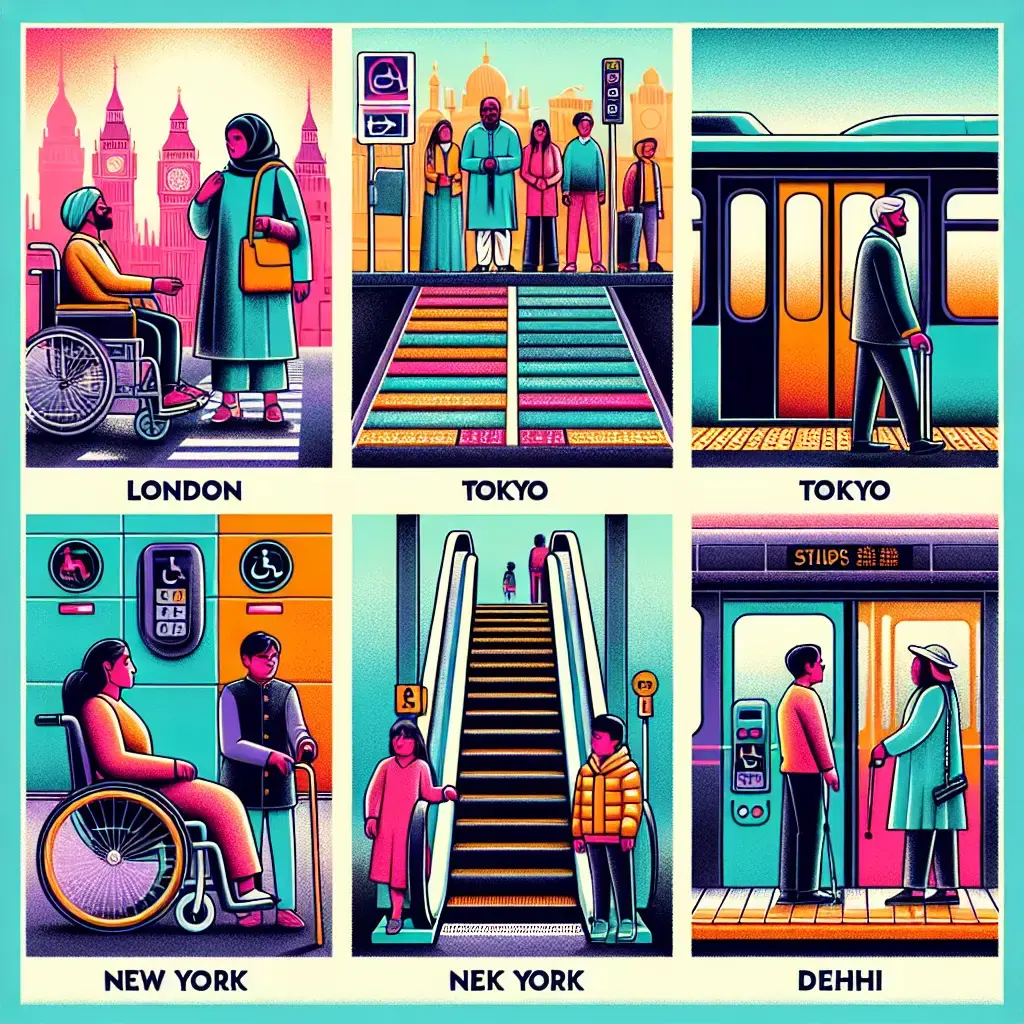
Several cities worldwide are setting benchmarks for accessible public transportation. London's comprehensive accessible metro systems serve as a prime example of how infrastructure can be designed to support disabled travelers effectively. The city's focus on integrating accessible buses and trains showcases a commitment to public transportation for all abilities Transport for London Accessibility.
Similarly, Tokyo's bustling metros have undergone significant modifications to accommodate disabled passengers. These changes include tactile paving for visually impaired travelers and elevators at every station, exemplifying universal design in public transport Tokyo Metro Accessibility.
Overcoming Challenges in Global Public Transport Accessibility
Despite these advancements, significant challenges remain. One prominent issue is ensuring that all regions, including developing countries, can implement and sustain inclusive transport systems. Continuous evaluation and adaptation are necessary to address these challenges, requiring collaboration between governments, transit authorities, and communities.
The unfortunate incident involving Hamza Waziri during the #EndBadGovernance protest in Bauchi State highlights the plight faced by disabled individuals when accessibility is overlooked Reuters on Hamza Waziri. Such events underscore the urgent need for improved barrier-free public transit solutions worldwide.
Best Practices for Accessible Travel Infrastructure
Developing accessible travel infrastructure involves more than just physical modifications; it requires an understanding of the diverse needs of disabled travelers. Successful strategies often incorporate feedback from users with disabilities, ensuring that public transport systems are truly inclusive.
For instance, many cities have started to involve disabled communities in the planning stages of transportation projects. This collaborative approach helps identify specific needs and tailor solutions accordingly, resulting in more effective disability-friendly transportation systems.
The Role of Technology in Enhancing Accessibility
Technology plays a crucial role in advancing accessible public transportation. Innovations such as mobile apps that provide real-time information about accessible routes and facilities are invaluable tools for disabled travelers. These apps offer convenience and confidence by enabling users to plan their journeys with ease.
Moreover, advancements in autonomous vehicles and AI-driven navigation aids are set to transform mobility solutions for disabled individuals further. As these technologies evolve, they promise to offer even greater freedom and independence for those with mobility challenges.
Engaging the Community: A Collaborative Effort
Creating truly inclusive transit options requires a collaborative effort involving various stakeholders. Governments must work closely with transit authorities, technology companies, and community organizations to ensure that accessible travel worldwide becomes a reality.
Public awareness campaigns and education initiatives are also vital in promoting understanding and support for disability-friendly transportation systems. By fostering an inclusive mindset, societies can ensure that public transport for disabled travelers is prioritized and supported at all levels.
Conclusion
Exploring accessible public transportation options worldwide reveals both inspiring advancements and ongoing challenges. As cities continue to integrate universal design principles into their transit networks, the goal of creating environments where everyone can thrive becomes increasingly attainable. However, achieving truly inclusive transport systems requires sustained effort, innovation, and collaboration.
By learning from successful case studies, leveraging technology, and engaging communities, we can pave the way for a future where accessible metro systems and barrier-free public transit are standard across the globe. This journey towards inclusivity is not just about accessibility—it's about empowerment, dignity, and equal opportunity for all travelers.
In embracing these insights, it's clear that accessible public transportation is not just about providing physical access but also about fostering empowerment, dignity, and equal opportunities. As we strive towards inclusive transit systems, it's important to recognize that this journey requires ongoing effort and innovation.
I encourage you to reflect on your own community's accessibility initiatives and share your experiences or suggestions on how public transport can be made more inclusive. By engaging in this dialogue, we can collectively contribute to a future where accessible transportation becomes a universal standard.
Together, let's champion the cause of accessibility and work towards a world where everyone can navigate their cities with independence and ease.
Thank you for exploring this journey with me. Your insights are invaluable as we work together towards a more inclusive world.
Author: Caleb Anderson